
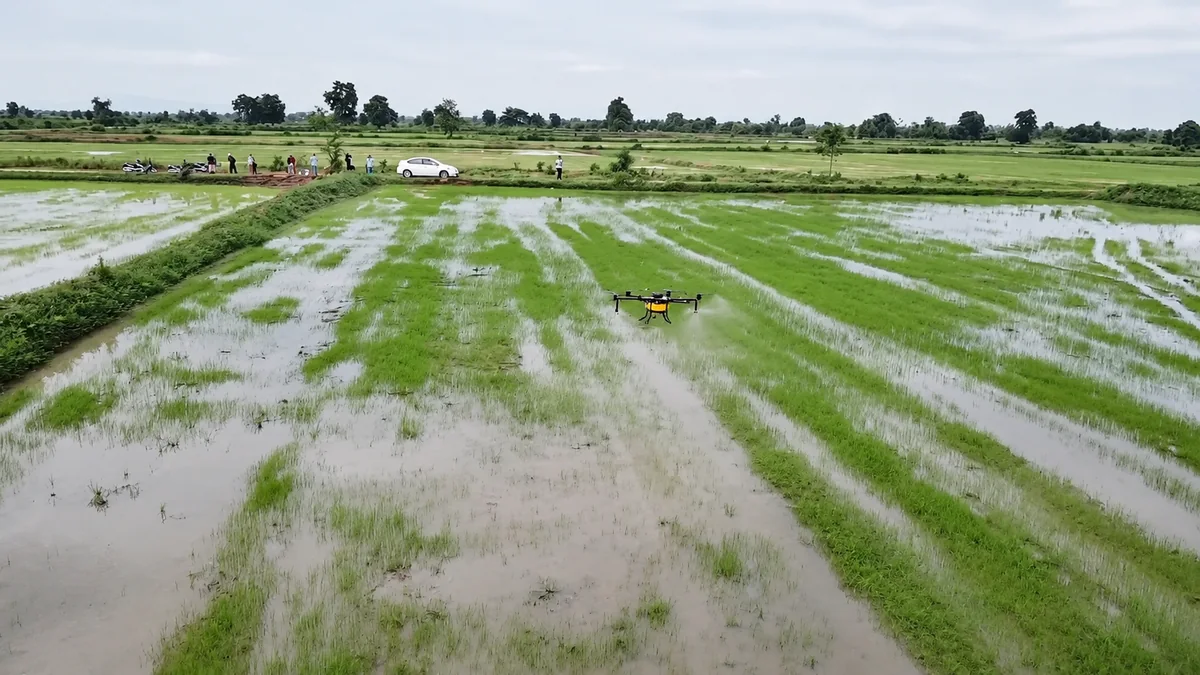
Drone Spraying for Paddy Field Herbicide Application
Paddy field herbicide spraying is an important part of weed management in rice cultivation. Uncontrolled weeds compete with rice plants for nutrients, sunlight, and growing space, potentially affecting crop development and productivity. Timely and effective herbicide application is therefore essential for paddy field management.
Agricultural spraying drones provide an alternative approach to herbicide application, particularly in rice fields where muddy soil, standing water, and limited ground access can make conventional spraying operations more challenging.
Why Use Agricultural Drones for Paddy Field Herbicide Application?
Traditional herbicide application in rice fields often requires workers to operate backpack sprayers or use ground-based equipment. However, wet and soft field conditions can make these operations difficult, especially during critical crop growth stages.
Agricultural spraying drones can help overcome some of these challenges by applying crop protection products from above the field.
Key advantages include:
1. Better Access to Wet and Muddy Fields
Paddy fields frequently contain standing water and soft soil. Aerial spraying allows operators to cover these areas without driving ground equipment through the field or walking directly through the crop with a backpack sprayer.
2. More Flexible Spraying Operations
Drone spraying can help farmers organize herbicide applications around crop growth stages and suitable weather conditions. This flexibility is particularly valuable when timely weed management is important.
3. Planned and Consistent Application
With an appropriately configured spraying system and calibrated flight parameters, agricultural drones can follow planned flight paths to achieve controlled application across the target area.
4. Reduced Manual Work
Drone-based spraying reduces the need for workers to carry spraying equipment through large or difficult-to-access rice fields, helping improve operational convenience and reduce physical workload.
Important Considerations When Spraying Herbicides in Rice Fields
Effective herbicide application requires more than simply operating a spraying drone. Several factors should be considered before starting a spraying mission.
- Herbicide selection: Choose products specifically suitable for the target weeds and rice growth stage. Always follow the product label and local regulations regarding drone or aerial application.
- Spraying parameters: Flight height, flight speed, application volume, nozzle configuration, and spray droplet size should be properly calibrated for the specific equipment and application conditions.
- Weather conditions: Wind speed, wind direction, temperature, and rainfall can influence spray deposition and drift. Avoid spraying when conditions increase the risk of off-target movement.
- Field planning: Identify field boundaries, nearby sensitive crops, waterways, and other areas requiring protection before beginning operations.
- Operator safety: Use appropriate protective equipment and follow pesticide handling, application, and equipment-cleaning procedures.
Proper preparation and calibration help improve application consistency while reducing unnecessary chemical movement outside the target area.
Agricultural Drone Spraying in Paddy Fields
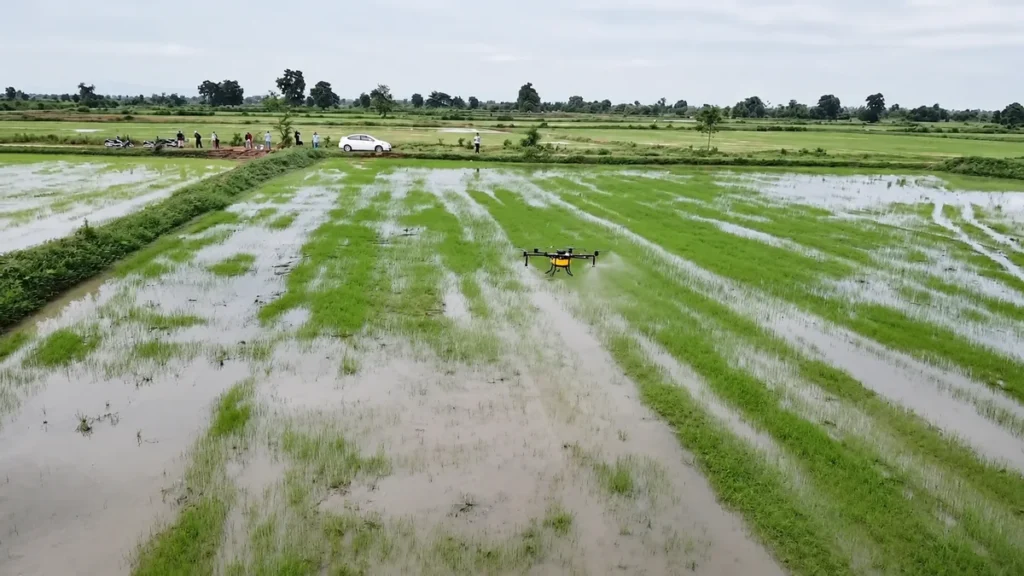
The following video demonstrates a drone sprayer being used for herbicide application in a paddy field.
Video: Drone Sprayer for Application of Paddy Herbicides
This application scenario illustrates how agricultural spraying drones can be incorporated into rice field weed management operations.
As agricultural drone technology continues to develop, aerial spraying offers farmers another practical option for managing crop protection operations, especially in fields where conventional ground-based equipment is difficult to use.
Choosing the Right Agricultural Spraying Drone
Different farms have different operational requirements. Field size, crop conditions, spraying frequency, tank capacity, and available labor should all be considered when selecting an agricultural spraying drone.
A suitable drone should provide a spraying system that meets the application requirements while offering reliable flight performance and convenient operation.
JOYANCE TECH develops agricultural spraying drones for different farming applications, supporting growers and agricultural service providers in more than 130 countries.
Explore our range of JOYANCE Agricultural Spraying Drones to find a solution for your farming operations.
Looking for an agricultural spraying drone for rice farming? Contact JOYANCE TECH to discuss your application requirements.